The Surveillance in the Majority World Network was part of the VII International LAVITS (Latin American Network of Surveillance, Technology, and Society Studies) Symposium in Rio de Janeiro, which took place under the theme “Tramar o presente: tecnopolíticas dissidentes e práticas do comum” (“Plotting the present: dissident technopolitics and common practices).
Our network organized a workshop on August 27th at the Universidade Federal do Rio de Janeiro (UFRJ). The session was titled “Weaving New Common Knowledges & ‘Conspiring’ Alternative Worlds: A Workshop On Vocabularies Around Surveillance.” The workshop’s central aim was to examine how language shapes understandings of surveillance and to bring Global South concepts and vernacular terms into conversation with dominant frameworks, particularly those originating from the Global North.
Here’s a summary of the workshop:
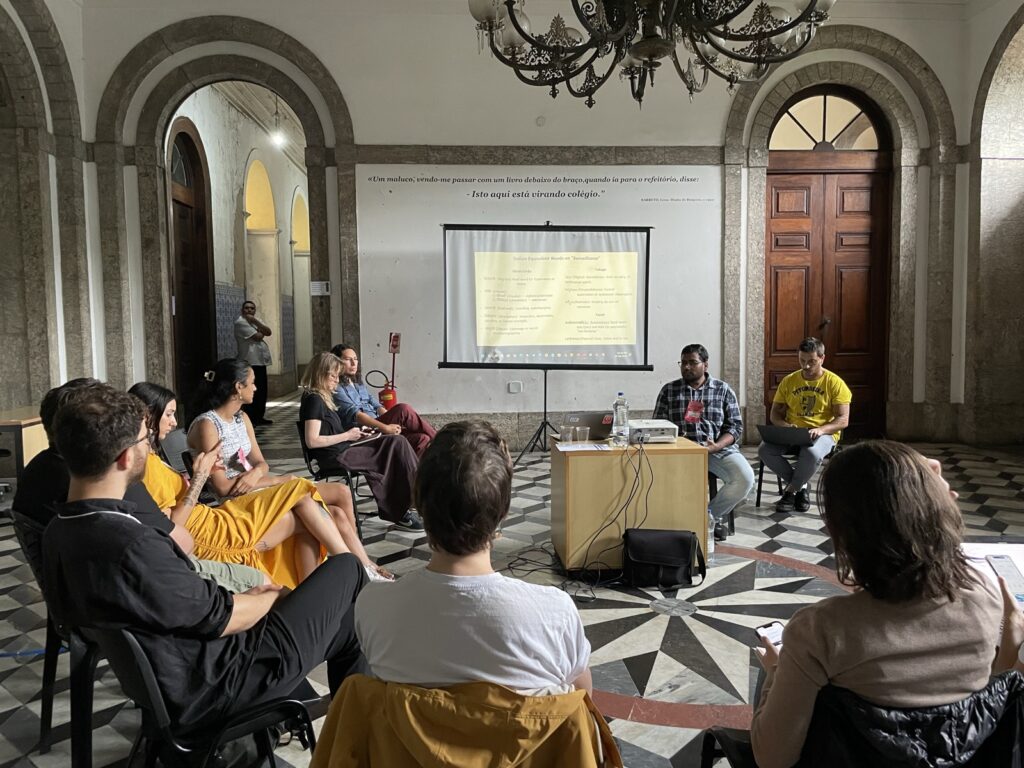
The workshop began with a brief introduction to the network’s activities followed by a series of short presentations, each focused on a specific word or concept from a particular linguistic and cultural context.
- Yung opened by discussing how Cantonese influences/is influenced by the ways in which categories, politics, and technological devices are conceptualized, such as artificial intelligence and automation.
- Arun then addressed several terms from Hindi, Tamil and Telugu such as Nigrani, Kaṇkāṇippu, Nigha Chowkidari, Badmaash, Kaydee, Das Numbri and Daghi, and analysed how these words relate to surveillance practices that intersect with caste, gender and race, highlighting dimensions often overlooked in mainstream literature.
- Mallika presented the languages of trans women and the ritual uses of glamour as coded forms of resistance, drawing parallels with practices such as pajubá in Brazil.
- Raziel examined the difficulty of translating “accountability” into Spanish and Portuguese, arguing that there is a level of untranslatability of such terms, rooted in top down actions and bureaucratic rules. This produces a gap that allows exploring divergent terms such as “Controle social” in Latin America, which means accountability from state level towards bottom up actors of civil society, showing that similar phrases carry distinct historical and political connotations.
- Isadora introduced the concept of “vigilância territorial indígena” or indigenous surveillance in Brazil, a term that reframes vigilance as a form of territorial care and protection rather than external control or top-down supervision.
- Pedro closed the first segment by discussing the term “ginga,” the bodily flow in capoeira that adapts in response to an opponent’s movements, used as a metaphor for non‑static and responsive forms of resistance.
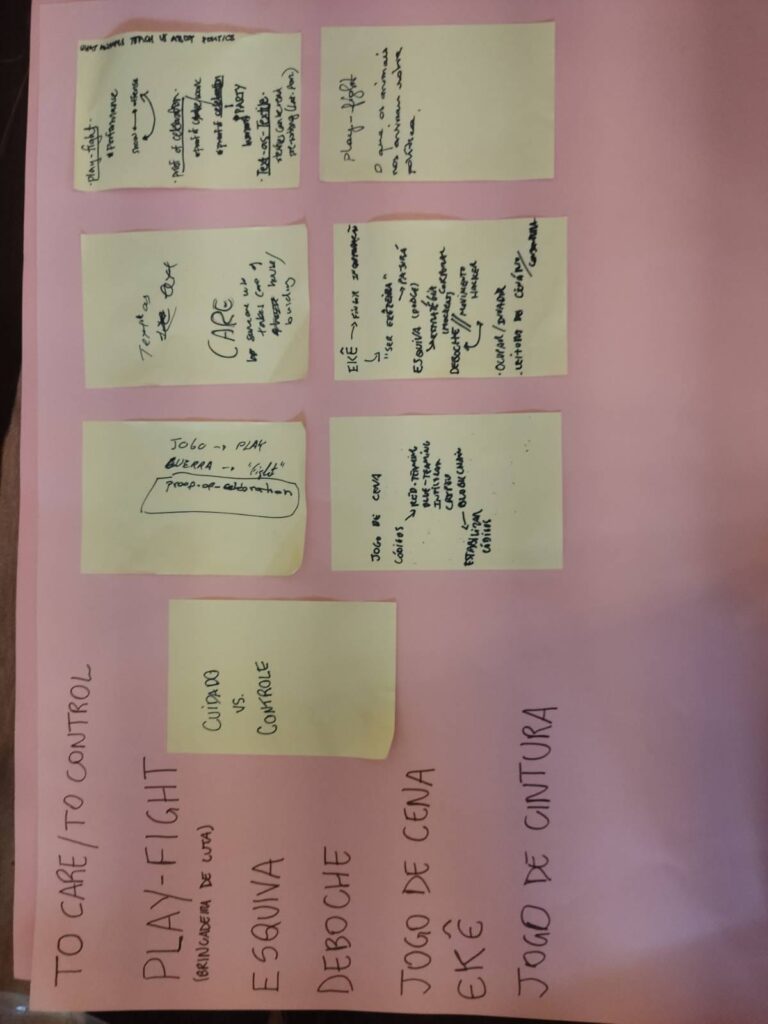
After these interventions, participants were divided into three groups for collective discussion. The aim was to generate new vocabulary and to critically interrogate the terms presented. Several concepts emerged from these conversations, including the opposition between caring and control, the notion of play‑flight as performance and defense related to ginga, the relationship between celebration and its verification, the metaphor of text‑as‑textile, the tactical use of mockery or deboche, practices of dodging, strategies of invasion and occupation, and the skill of “reading the scene” as a situated form of knowledge. These contributions were summarized in a final plenary session, where participants shared their reflections and the new terms they had discussed or questioned.
Throughout the workshop, we presented the ongoing work of the Surveillance in the Majority World network and distributed a QR code with an invitation for attendees to join as members and receive updates, including the newsletter. Some network members also took part in other panels at the symposium, presenting their recent research and engaging with broader debates on surveillance in Latin America. The session provided an opportunity to bring together researchers from different backgrounds, to problematize the construction and use of language in surveillance studies, and to invite participants to consider how alternative vocabularies might open up different understandings of technological and social dynamics.
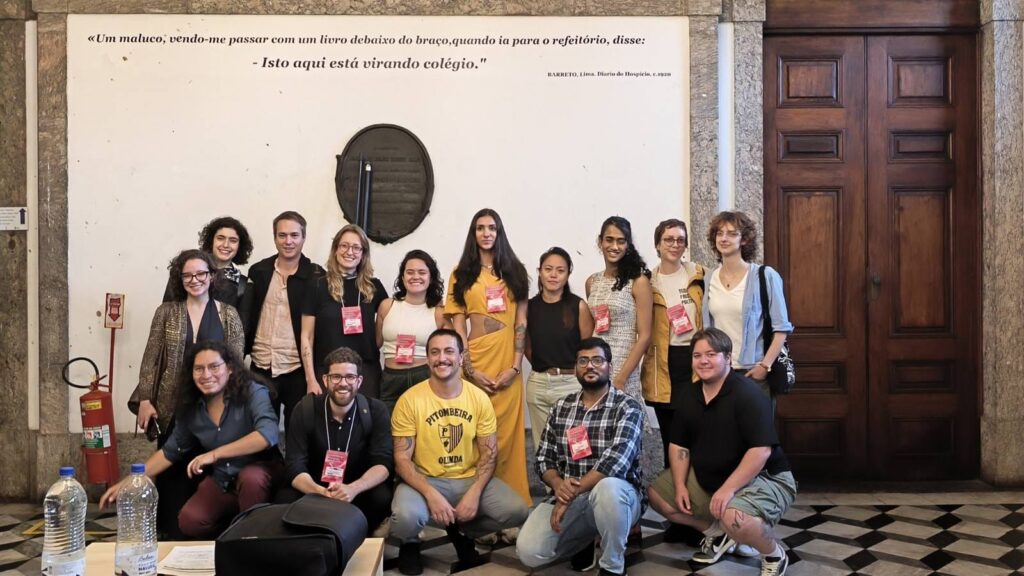
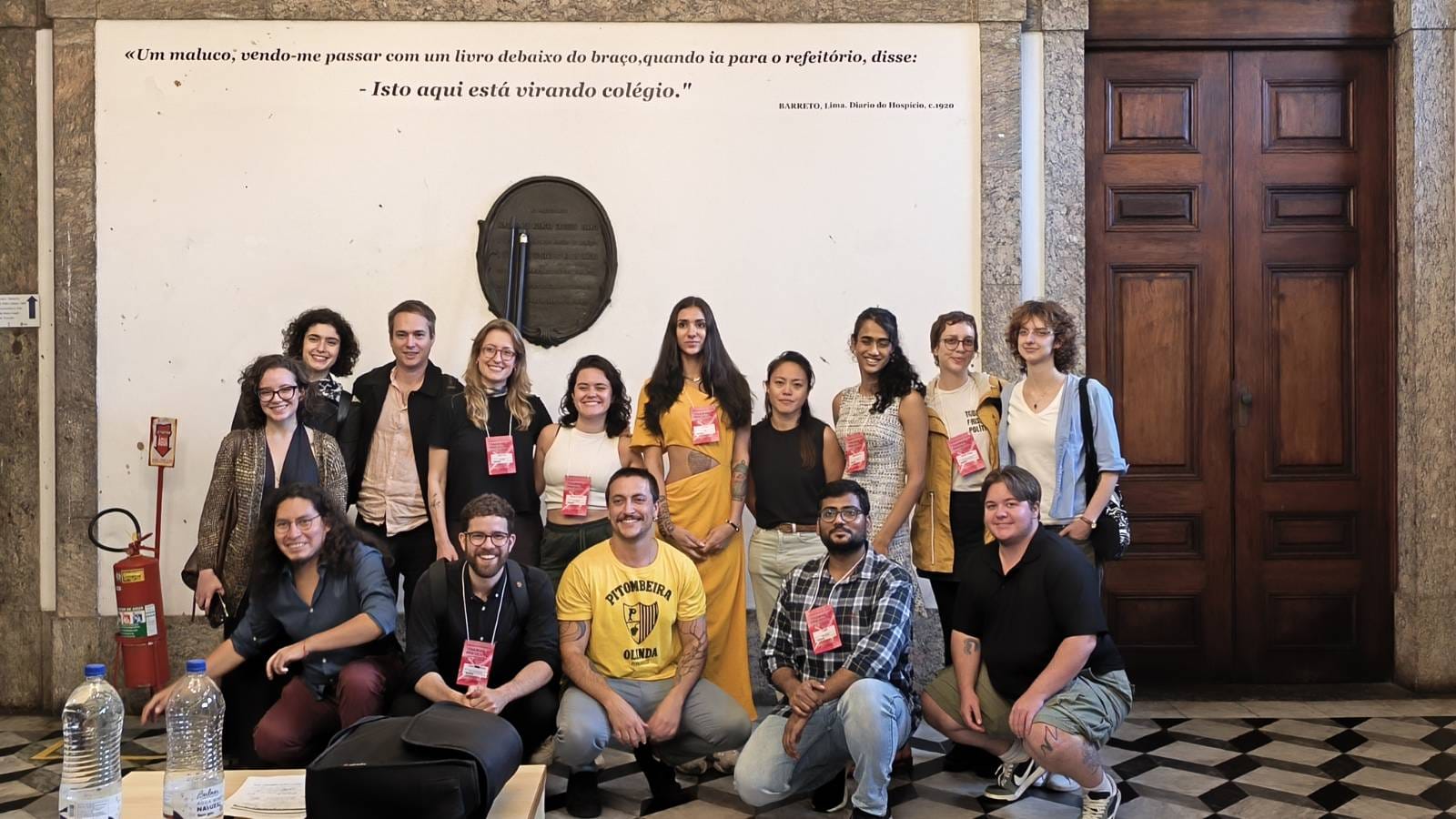
Here are photos from the session with our amazing team (Yung, Arun, Mallika, Isadora, Pedro) and participants!